
People and Community
People and Community
- Caring Workplace
- Human Rights Due Diligence
- Human Resource
- Compensation and Benefits
- Learning Environment
- Community Care
SAS Group operates facilities across Europe, America, and Asia, embracing a global perspective and supporting the values of Diversity, Equity, and Inclusion (DEI).
We are committed to fostering a workplace that respects differences, promotes equity, and inspires innovation. We value the unique backgrounds, experiences, and perspectives of every employee and regard them as an important resource for the growth of our global business. We strictly comply with local laws and regulations in every country in which we operate. Regardless of gender, race, nationality, age, marital status, language, ideology, religion, culture, political affiliation, sexual orientation, social status, or physical and mental abilities, everyone can feel respected and included here. We believe that by embracing diverse talents and perspectives from around the world, we can continue to strengthen our competitiveness and better serve and contribute to our customers and society. PEOPLE is one of SAS’s core values. Through the continuous refinement of our policies and practices, we ensure that all employees have equal opportunities to participate in company affairs and pursue their career development. Guided by a people-centered approach and acting with goodwill, we actively promote the well-being of employees, customers, shareholders, communities, and other stakeholders. We are committed to making diversity, equity, and inclusion a long-term objective of our sustainable business operations and to laying a solid foundation for every step of our future development.
- Harassment-Free Workplace
To prevent employees from being subjected to any form of physical or psychological unlawful infringement(including sexual harassment) while performing their duties, the Company has established the Regulations for the Prevention of Workplace Violence and Protection Management and provides relevant training programs. Necessary safety and protective measures are implemented to safeguard employees’ occupational safety and physical and mental well-being.
In addition, a Statement on the Prevention of Workplace Violence is posted on workplace bulletin boards, and multiple accessible grievance channels are provided to employees. The Company also conducts regular workplace violence risk assessments. We maintain a zero-tolerance policy toward any form of sexual harassment and provide regular awareness training and educational programs to enhance employees’ understanding of gender equality and respectful workplace behavior. To prevent sexual harassment and promote mutual respect in the workplace, the Company has established Sexual Harassment Prevention Measures, Complaint and Investigation Procedures, and offers confidential reporting mechanisms for employees. Based on the results of assessments and investigations, the Company continuously reviews and implements appropriate corrective actions and safety measures, striving to create an equal, safe, respectful, inclusive, and friendly working environment.
- Prohibition of Child Labor and Forced Labor
During the recruitment process, the Company rigorously verifies identity documents to ensure that child labor is not employed in any manufacturing operations. Exceptions apply only to legally compliant workplace learning, internship, or cooperative education programs.
Upon establishing an employment relationship, the Company and each employee voluntarily enter into a written employment contract, ensuring that employment terms are transparent and clear. All forms of forced, coerced, or involuntary labor are strictly prohibited.
- Management of Working Hours
Employee working hours are managed in strict accordance with local labor laws and RBA working hour standards. Staff members are entitled to two days of rest within every seven-day period, comprising one rest day and one regular day off. Total daily working hours shall not exceed twelve hours, and a minimum thirty-minute break is provided for every four consecutive hours of work. Overtime work is limited to forty-six hours per month.
A comprehensive attendance system has been implemented to automatically notify employees of any violations or irregularities, making it easy for them to review their attendance records. The system also provides employees with access to real-time inquiries of their personal attendance records, enhancing transparency in working-hour management.
When overtime is required, prior consent must be obtained from employees, and overtime compensation or compensatory leave will be granted in accordance with statutory requirements. For indirect employees, the Company offers a 30-minute flexible schedule option to support a better work-life balance.
- Employee Grievance and Communication Channels
Sino-American Silicon Products Inc. (SAS) is committed to fostering a respectful, diverse, and inclusive workplace and has established accessible employee grievance and communication mechanisms. All employees may raise concerns related to working conditions, labor rights, workplace misconduct, discrimination, harassment, compensation and benefits, occupational health and safety, and management practices through various formal channels, including labor-management meetings, dedicated email inboxes, physical suggestion boxes, the whistleblowing system, and other communication platforms.The grievance mechanism is available to all employees across the Company.
The Company encourages employees to express opinions or submit grievances without fear of discrimination, intimidation, or retaliation. All cases are handled through designated channels and managed by responsible departments. SAS is committed to maintaining the confidentiality of employees’ identities and the information they provide, and strictly prohibits any form of retaliation, discrimination, or adverse treatment to safeguard employee rights and promote a culture of open communication.
All grievances are processed in accordance with established procedures, including case intake, investigation, resolution, and follow-up actions. When grievances or employee concerns involve matters such as harassment, discrimination, workplace misconduct, or other significant employee-rights issues, the Human Resources and Legal departments provide appropriate support and ensure that whistleblower identities and rights are protected in accordance with applicable regulations. Where allegations are substantiated, the Company takes appropriate corrective and remedial actions based on the nature of the case and investigation findings and continues to monitor improvement efforts to maintain a safe, respectful, and supportive working environment.
In addition, SAS regularly gathers employee feedback and suggestions through labor-management meetings. Employees may also submit comments, suggestions, or concerns at any time through dedicated email addresses, hotline services, physical suggestion boxes, and other formal grievance channels. All feedback is reviewed by the appropriate departments, which are responsible for responding to and following up on improvement actions.
SAS follows a policy of respect for employees and adheres to legal standards in all jurisdictions where it operates. The company safeguards the rights of full-time, contract, temporary personnel, interns, and job applicants, and encourages partners and suppliers to adopt similar practices throughout their operations.
We acknowledge and uphold the core principles of human rights protection as outlined in key international conventions and standards, including the Universal Declaration of Human Rights, the United Nations Global Compact, the International Labour Conventions, the United Nations Guiding Principles on Business and Human Rights, and the Responsible Business Alliance Code of Conduct. We comply with relevant labor laws and have established a Human Rights Policy, committing to the creation of a fair, safe, and dignified working environment.
- Key Elements
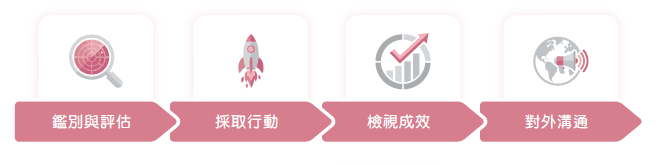
In accordance with the United Nations Guiding Principles on Business and Human Rights (UNGPs), all organizations bear the responsibility to uphold human rights. Human rights due diligence constitutes a fundamental aspect of SAS’s operational policies and procedures. We undertake due diligence activities guided by the following framework, ensuring consistency with the key elements advocated by leading international human rights bodies:
- Risk Identification and Strategic Metrics
SAS Group’s human rights due diligence covers all entities within the Group as well as its suppliers. Through diverse communication channels, SAS maintains ongoing engagement with all stakeholders, including employees, suppliers, customers, local communities, and investors. The Company proactively discloses human rights due diligence information through its official website, media communications, sustainability reports, and annual reports for shareholders. To ensure accessibility for stakeholders worldwide, information is provided in both Chinese and English, covering the Company’s commitments, due diligence processes, policies and actions, identification and assessment procedures, and related initiatives. Guided by its core value of integrity, SAS is committed to ensuring the accuracy and transparency of all disclosed information.
At most operating sites, human rights-related training is provided to new employees as part of the onboarding process. In 2025, a total of 1,190 participants completed human rights training, with total training hours reaching 1,052 hours. In addition, existing employees receive periodic training and awareness programs on workplace violence prevention, anti-harassment, and related topics each year. For individuals with business relationships with SAS, such as suppliers, the Company not only discloses relevant human rights information on its official website but also provides a Supplier Code of Conduct as the standard for implementation and compliance.
| Risk Issues | Strategic Metrics | Implementation Results |
|---|---|---|
| Labor Laws and Regulations | 1. Establish work rules and post them in a prominent and easily accessible location. During new employee training, provide instruction on work rules and regulations in the employee’s native language to ensure a full understanding of labor rights. 2. Through the internal control system and internal audits, regularly review and update all rules and regulations to ensure that operations remain in full compliance with labor laws and regulations. 3. Establish diverse communication channels. Communication and grievance mechanisms shall be available at both Taiwan and overseas sites, including labor-management meetings, dedicated email accounts, hotlines, physical suggestion boxes, and whistleblower systems, to promptly identify and resolve workplace issues. 4. In the event of changes to labor conditions, the Company shall consult its internal legal department to ensure the protection of employee rights. | No unlawful incidents have occurred at any site. |
| Child labor | 1. The Company rigorously verifies candidates’ identity documents during recruitment and ensures, through interviews and observations, that no child labor under the age of sixteen is employed. 2. Employees under the age of eighteen shall not engage in work that may endanger their health or safety, nor shall they be assigned to night shifts. | No illegal employment of child labor has occurred at any site. |
| Forced labor | 1. The “Personnel Employment Rule” explicitly stipulates the prohibition of employing forced, threatened, or involuntary labor. 2. Employee attendance is compiled and analyzed on a monthly basis to support supervisors in managing working hours. To safeguard employees’ physical and mental well-being, the system issues daily real-time alerts on working hours. The Human Resources Department, together with department supervisors, develops countermeasures to ensure the effective implementation of preventive and remedial measures. 3. In line with the RBA framework, a Supplier Code of Conduct has been established, and all suppliers are required to commit to full compliance. | No site has been investigated by the competent authority due to complaints related to forced labor. |
| Working conditions | 1. An annual salary survey is conducted to assess market salary levels and overall economic indicators, supporting appropriate salary adjustments and ensuring competitive starting pay. 2. Employee Assistance Programs (EAPs) provide employees with free, professional, and strictly confidential consultation services in five areas: psychological, managerial, legal, health, and financial. 3. Regular health examinations are provided for all active employees. 4. ISO 45001 certification for the Occupational Health and Safety system is continuously maintained to ensure effective operation. This includes establishing hazard assessment and risk classification mechanisms, forming emergency response teams at each site, and providing comprehensive occupational health and safety training. 5. The highest-level supervisor at each site shall establish an EHS organization and an Occupational Health and Safety Committee. 6. Procedures for the Prevention and Protection against Unlawful Infringement in the Workplace are established to regularly assess risks of workplace misconduct and to conduct related education and training. | 1. In 2025, a total of 1,190 participants attended human rights–related education and training sessions, accumulating 1,052 training hours. 2. In 2025, 75 individuals received EAP consultations, including participants from the subsidiary GlobalWafers. To protect users’ privacy, the EAP provider does not disclose disaggregated statistics. 3. Received the Excellence Award in the 2025 Hsinchu Science Park Workplace Gender Equality Promotion Unit Selection for three consecutive years, 2023 to 2025. 4. In 2025, 55 employees were placed under abnormal workload tracking and management, representing approximately 13% of the total workforce. 5. In 2025, occupational health and safety–related education and training sessions recorded 2,135 participants, totaling 1,075.5 training hours. |
| Discrimination and Harassment | 1. The Personnel Employment Rule explicitly stipulates the strict prohibition of any unlawful discrimination during recruitment and in the course of employment. 2. Annual training on the prevention of discrimination and harassment is conducted for all employees, with mandatory participation required for supervisors to prevent coercion, oppression, and workplace violence stemming from power imbalances. 3. Ensure equal employment opportunities for persons with disabilities. 4. Establish the Guidelines for the Prevention of Sexual Harassment in the Workplace and post the workplace violence prevention statement in a prominent location to demonstrate SAS’s firm commitment to eliminating such incidents. 5. In response to global population aging, conduct hazard identification and risk assessments, implement preventive and improvement measures, and follow up on implementation effectiveness to ensure that work requirements remain suitable for middle-aged and senior employees while protecting their health. | 1. In 2025, a total of 5 persons with disabilities were employed, including 2 individuals with severe or profound disabilities, representing 1.6% of the total workforce. 2. No incidents of discrimination or harassment were reported at any site. |
| Human Trafficking | Ensure that all labor is sourced through direct employment or authorized human resources dispatch services and staffing agencies. Under no circumstances shall unlawful methods be employed to coerce individuals into work that contravenes laws or regulations, or to provide compensation that is inequitable in relation to their performance. | No sites have reported human trafficking. |
| Freedom of Association | Enhance labor-management communication and establish effective dialogue mechanisms, while promoting employee association formation and participation in company-sponsored group activities. | Quarterly labor-management meetings are held at every site. |
| Equality and equal pay for equal work | 1. Establish the Regulations for Salary, Allowances, and Bonuses and prepare job descriptions to ensure that salaries are determined based on objective criteria (such as job responsibilities, scope of duties, and performance outcomes) rather than subjective judgment. 2. The EAP is available to employees for consultation on work-related stress, workplace difficulties, or personal concerns, helping them maintain a healthy work-life balance and ensuring that supervisors treat all employees fairly and equitably. | SAS conducts annual salary adjustments in accordance with market benchmarks and individual performance evaluations. |
| Maternity care | 1. The “Maternal Health Protection Procedures” are implemented to identify and monitor the working conditions of breastfeeding employees, ensuring that female employees can work with peace of mind during the nursing period. 2. Breastfeeding rooms are established at each site to provide convenient access for employees in need. | In 2025, a total of five individuals were identified, classified, and provided with maternal protection measures. |
Talent is at the core of sustainable corporate growth. SAS values diversity and inclusion, respects employees’ right to choose and work autonomy, and is committed to working together with employees to create achievements. In response to the challenges posed by globalisation, technological progress, organizational change, and demographic trends, SAS has established comprehensive short-, medium-, and long-term human resource management plans. These address key corporate objectives relating to attracting, retaining, developing, and evaluating talent.
In terms of human resources recruitment, SAS attracts knowledge-based talent with professional capabilities and potential through a structured and fair interview process; in talent development, it cultivates versatile talent with cross-disciplinary capabilities through job rotation and diverse learning mechanisms. At the same time, the Company internally encourages teamwork and a project-oriented work model, creating a safe, healthy workplace environment that respects human rights.
SAS has established a performance-linked reward system, supporting employees and supervisors in jointly setting individual goals and promoting the simultaneous growth of organizational and individual value. We continue to refine the quality of human resources services, helping employees realize their potential and create greater overall value.
Adopting a people-oriented philosophy, SAS acknowledges and respects global cultural diversity. Employees are encouraged to stay passionate, demonstrate collaboration and integrity, and adhere to local regulations. At the same time, through continuous innovation and self-improvement, SAS continuously enhances organizational capabilities and pursues outstanding performance. To deepen consensus on its core values and corporate vision, the Company maintains ongoing dialogue with employees through diverse communication channels, including the internal website, regular meetings, publications, and education and training, strengthening cultural identity and promoting the organization’s long-term and steady development.
As of 2025, SAS (headquarters & Chunan, Yilan, SGE-Hsu-Hsin branches) and GlobalWafers employed a total of 7,389 individuals, with SAS alone employing 434 staff members. SAS promotes gender equality; within its workforce, 69.8% are male and 30.2% are female. Age distribution is as follows: 5.5% under 30 years, 80.2% between 30 and 50 years, and 14.3% over 50 years. By location: 8.1% are based in Hsinchu, 35.7% in Chunan, and 56.2% in Yilan. Regarding job type: 49.1% are direct personnel, 50.9% indirect; By employment type, regular employees accounted for 95.2% of the workforce, while non-regular employees accounted for 4.8%; Employment contracts comprise 4.8% fixed-term and 95.2% non-fixed-term arrangements. Employees requiring work visas constitute 0.4%, with those not requiring visas accounting for 0.2%.
- Talent Recruitment and Talent Pipeline Strategy
Sino-American Silicon Products Inc. (SAS) has established a comprehensive talent pipeline strategy aligned with its long-term business development objectives and critical talent needs. The strategy encompasses vocational education partnerships, industry-academia collaboration, campus engagement, and STEM talent development programs to continuously cultivate the technical and managerial talent required for the Company’s future growth. Through long-term partnerships with educational institutions, SAS proactively engages and develops high-potential talent, creating a stable and sustainable talent pipeline to support both corporate growth and industry advancement.
SAS believes that talent is a cornerstone of sustainable business growth. Looking ahead, the Company will continue to strengthen its talent pipeline through campus partnerships, talent cultivation initiatives, and industry-academia collaboration. By building a talent pool aligned with industry trends and strategic business needs, SAS aims to enhance its long-term competitiveness and support sustainable corporate development.
Since 2014, SAS has collaborated with vocational high schools, colleges, and universities located near its operational sites through vocational training and industry-academia partnership programs. Partner institutions include Chung Hua University, Yu Da University of Science and Technology, Tung Wu Vocational High School, Tungnan University, and Vanung University. These programs provide students with opportunities for hands-on learning and equipment operation experience, helping bridge the gap between academic knowledge and practical application. To date, 153 students have participated in on-site training and practical learning programs at SAS. Through these long-term partnerships, the Company identifies individuals with potential in production management, engineering, technical development, and innovation, gradually building a talent pool that is aligned with corporate culture and organizational competency requirements.
Through its subsidiary GlobalWafers, the Group also engages in industry-academia collaborations and strategic alliances with academic institutions. These partnerships facilitate the exchange of professional knowledge and technical expertise through joint research projects, enabling both parties to leverage complementary strengths and solve technical challenges encountered during product development. In addition to enhancing the professional capabilities of the Company’s R&D personnel, these collaborations contribute to the cultivation of highly qualified academic talent and promote technological innovation and industry development. In 2025, GlobalWafers Taiwan continued to carry out 12 collaborative projects with leading academic institutions, including National Tsing Hua University, National Yang Ming Chiao Tung University, National Central University, and National Taiwan University of Science and Technology.
Through partnerships with local universities, SAS organizes company visits that provide students with opportunities to learn about the semiconductor and renewable energy industries, manufacturing processes, and career development pathways within the Group. Participants are also invited to tour operational facilities and power plant sites to gain a deeper understanding of the Company’s working environment and technologies. Feedback collected through post-visit satisfaction surveys indicates that students generally leave with a positive impression of SAS, and many consider the Company a potential employer upon graduation.
SAS is also committed to nurturing the next generation of technology professionals. In 2021, SAS launched the Photovoltaic Seed Program to foster renewable energy education from an early age. Through relatable storytelling, everyday-life topics, and hands-on solar energy applications, the program helps children develop an accurate understanding of solar photovoltaic energy as a safe, affordable, and sustainable source of clean energy, while encouraging them to incorporate sustainable practices into their daily lives.
In 2026, SAS, GlobalWafers, and Susen Green Energy Co., Ltd (SGE) continued their long-term commitment to educational equity and technology talent development. By transforming expertise in the semiconductor and renewable energy sectors into accessible science education content, the three companies strive to inspire future generations. To help bridge the gap in educational resources between urban and rural areas, the companies partnered with IC Broadcasting and Hsuan Chuang University to promote the Pioneer Seedling Program. Together, we hosted the 2026 SAS x GlobalWafers x SES Public Science Camp at Hsuan Chuang University in Hsinchu.
Marking the third consecutive year that the SAS Group has participated in this initiative, the camp welcomed 52 elementary school students from the Hsinchu area to take part in a two-day, one-night immersive learning experience. Through hands-on activities and collaborative projects, the program encouraged children to explore the world with curiosity, confidence, and the courage to embrace new challenges.
- Hiring People with Disabilities
In accordance with government employment policies for persons with disabilities, SAS hires employees in compliance with relevant laws. The Company implements employment equality and promotes a diverse and inclusive workplace environment. In 2025, SAS employed five persons with disabilities. Two had severe or profound disabilities and were counted as four persons for statutory purposes, bringing the statutory count to seven. The employment ratio accounted for 1.6% of the total workforce, thereby creating an inclusive and diverse working environment.
- New Hires and Employee Turnover Statistics
In 2025, SAS and GlobalWafers hired 689 staff members. By the end of the year, new male employees comprised 6.5% of the total workforce, while female new hires accounted for 2.8%. With respect to age, recruits those aged 30 to 50 represented 4.3%, and under 30 years old made up 4.0%.
In 2025, 1,185 employees left the Company, and the voluntary turnover was 19.8%. Male employees who left the Company constituted 11.1% of the total, while female employees made up 4.9%. Regarding age, 9.8% of departing employees were between 30 and 50 years old, and 3.0% were under 30.
SAS offers a competitive remuneration and benefits package, with annual salary reviews conducted in alignment with the Company’s operational performance, prevailing industry trends, inflationary factors, and individual employee achievements. Based on these factors, the Company establishes annual salary adjustment standards to ensure the fairness and reasonableness of compensation levels.
To attract and retain high-calibre professionals, the Company has implemented a dual-track remuneration framework for both management and specialist roles, enabling employees to realise their full potential and leverage their unique strengths. Salary levels are established based on job-related criteria—including position, seniority, capability, and job performance—to ensure fair compensation practices and prevent any form of discrimination or inequity related to gender, age, or other personal characteristics.
Furthermore, compensation is directly linked to the Company’s profitability, fostering greater employee cohesion, incentivising exceptional performance, and enabling the collective sharing of business success. Promotion recommendations are made annually, grounded in comprehensive evaluations of work performance and individual contributions. SAS is committed to fostering an environment where employees recognize the Company’s dedication to sharing its operational achievements, promoting teamwork, enhancing unity and belonging, cultivating a proactive growth culture, and establishing itself as an employer of choice within the industry.
- Performance-Based Compensation
Sino-American Silicon Products Inc. (SAS) has established a performance-based compensation system applicable to all regular employees, including non-managerial and non-sales employees. The Company conducts annual performance evaluations to assess employees’ job performance, fulfillment of responsibilities, and overall contributions. Evaluation results serve as a basis for salary adjustments and the allocation of variable compensation. Eligible employees may receive annual performance bonuses and profit-sharing awards based on individual performance ratings and Company operating results.
In addition to fixed salaries, employees may receive various forms of variable compensation, such as performance bonuses and employee profit-sharing awards, based on individual performance and the Company’s operating results. Through this compensation framework, SAS seeks to maintain market competitiveness, ensure fairness, and provide effective incentives while aligning employee rewards with both individual contributions and corporate performance.
- Performance Appraisal and Feedback Mechanism
Sino-American Silicon Products Inc. (SAS) has established a comprehensive performance management system under which all regular employees participate in an annual performance review. Managers conduct a holistic evaluation at the end of each year based on employees’ achievement of objectives, work performance, core competencies, and teamwork, with the results serving as a basis for performance recognition and talent development.
In addition to the annual performance review, SAS promotes ongoing communication and performance feedback between managers and employees to help employees understand their performance, strengthen professional capabilities, and continuously improve their work outcomes. For employees in managerial positions, the Company has implemented a multi-dimensional assessment process, whereby cross-functional managers and colleagues with relevant collaborative experience provide feedback from multiple perspectives. This serves as an important reference for leadership development and managerial growth. In 2025, the completion rate of multi-rater assessments for managerial employees reached 100%.
SAS places great importance on employee career development. Through performance evaluations and day-to-day management interactions, managers work closely with employees to discuss career aspirations, capability development needs, and future career planning. Performance review results are also used as key inputs for training programs and talent development initiatives. Through continuous feedback and coaching, the Company supports employee growth while aligning individual development goals with corporate business strategies.
▼Career Development Through Performance Reviews

- Employee Benefits
In addition to enrolling employees in Labor Insurance and National Health Insurance as required by law, SAS provides group insurance coverage exceeding statutory requirements, encompassing term life, accident, aviation, major burn, injury medical, hospitalisation, cancer, and epidemic prevention insurance. Epidemic coverage includes diagnosis benefits and hospitalisation protection, thereby safeguarding employee health and safety.
Under the Labor Standards Act, old pension scheme participants receive monthly retirement reserves equal to 2% of salary, deposited into a designated retirement account at the Bank of Taiwan, with annual allocations fully compliant with legal requirements. The Supervisory Committee of Business Entities’ Labor Pension Reserve meets regularly as required by law to oversee pension matters, complemented by an annual actuarial evaluation to ensure sufficiency.
For those eligible under the new pension scheme, 6% of monthly salary is contributed to individual accounts managed by the Bureau of Labor Insurance, to support employees in building a secure and sustainable retirement foundation.
To encourage employees to share in the Company’s long-term business success, Sino-American Silicon Products Inc. (SAS) offers all regular employees the opportunity to participate in its Employee Stock Ownership Trust (ESOT) program. Employees may voluntarily invest in Company shares through regular fixed monthly contributions, while the Company provides a 100% matching contribution based on the employee’s contribution amount, which is deposited into the ESOT account.
Through this program, SAS supports employees in building long-term financial security and retirement preparedness, while fostering a stronger sense of ownership, engagement, and commitment to the Company. The program also serves as an important tool for talent retention by aligning employees’ interests with the Company’s long-term growth and value creation.
In 2025, the participation rate in the Employee Stock Ownership Trust Program reached 66.6%, demonstrating employees’ strong confidence in the Company’s long-term development and the value of the program.
Sino-American Silicon Products Inc. (SAS) is committed to supporting employees in balancing their work and family responsibilities. In accordance with applicable regulations, the Company provides paid maternity leave, paid prenatal check-up and paternity leave, and parental leave without pay. These programs are available to all eligible regular employees.
In addition, SAS has implemented a range of support measures to help employees balance work and family responsibilities during different stages of parenthood and childcare.
To support employees with childcare needs, SAS has established lactation rooms at its operating sites to provide a breastfeeding-friendly and maternity-protection environment. In accordance with relevant regulations, the Company also provides nursing breaks and health support services. Furthermore, through its Employee Assistance Program (EAP), SAS offers counseling resources related to parenting, family relationships, and mental health, helping employees address the needs and challenges encountered at different stages of life.
For employees who apply for parental leave, SAS safeguards their reinstatement rights and provides return-to-work support to facilitate a smooth transition back to the workplace. Through health promotion initiatives, family support programs, and multiple communication channels, the Company continues to foster a friendly and inclusive work environment, enabling employees to balance career development with family caregiving responsibilities.
To help employees maintain a balance between family and work life, Sino-American Silicon Products Inc. (SAS) provides maternity subsidies and paid maternity leave, offering comprehensive family care support to its staff.
Childbirth Subsidies|
- Birth Allowance: NT$14,000 for a single birth; NT$30,000 for twins.
- First-Year Childcare Allowance: NT$12,000 for a single child and NT$24,000 for twins upon the child’s first birthday.
Paid maternity leave|
Type of Leave
Maternity Leave Prenatal Check-up Leave Paternity Leave and Prenatal Check-up Leave
Eligible Empolyees
Empolyees
Empolyees
spouse is pregnant
Leave entitlement 8 weeks with full pay 7 days with full pay 7 days with full pay
SAS offers complimentary meals to employees during working hours in staff restaurants. The objective is to provide a suitable dining environment and a variety of meal options to accommodate different dietary requirements. A restaurant monitoring task force oversees meal quality, nutritional standards, and health and catering controls.
Established in 1988, the SAS Employee Welfare Committee implements employee benefits such as emergency relief and first-time cancer support. Cash compensation is provided for marriage, childbirth, and funerals. Employees receive festival and birthday cash gifts, education scholarships, illness and hospitalization subsidies, discounts at designated shops, regular outings, year-end parties, and sponsorships for social welfare organizations. The Committee also holds family days and plant tours on an ad hoc basis, inviting employees and their families to learn more about the Company’s operations and strengthen organizational cohesion.
Employee associations promote physical and mental health, entertainment, teamwork, mutual assistance, and communication among staff. Occasional beach cleaning activities are organized to support environmental efforts. Audio-visual facilities have been added to enhance the dining environment.
In 2025, total subsidy expenditures reached NT$4.22 million, averaging NT$10,000 per employee. The employee travel program offers a wide variety of enriching itineraries for employees to choose from, and family members are also welcome to participate.
To strengthen human capital and advance the Company’s growth objectives, we cultivate a learning-focused organizational culture by providing diverse resources and training channels. We actively reinforce on-the-job training and remain committed to supporting the comprehensive career development of every employee. Annual training plans are developed each year in alignment with corporate strategies and policies, tailored to the specific competencies and requirements of each position. Professional capabilities and job competencies are enhanced through both internal and on-the-job training (OJT), and employees are encouraged to participate in programs offered by external professional training institutions.
By leveraging various training methods, the Company ensures multiple learning opportunities that facilitate individual and organizational development. At the end of each quarter, we review and evaluate the training initiatives to ensure their effectiveness in skill enhancement. This systematic approach is designed to increase work efficiency and competitiveness, thereby aligning personal advancement with the Company’s sustainability goals.
SAS has created an E-Library Academy for employees to read and review training materials at any time. The Academy provides resources for multiple professional fields, enabling employees to undertake self-study across disciplines, thereby enhancing their professional capabilities and accelerating their growth. The flexible learning arrangement helps cultivate a culture of reading within the organization, while continuous learning further strengthens overall operating performance.
In 2025, the combined training development hours for SAS and GlobalWafers reached 225,956 hours. For SAS, the average education and training hours by gender are 33.5 hours for men and 27.9 hours for women. By employee classification, direct personnel received an average of 28.2 hours, while indirect personnel averaged 35.3 hours of training.
- Diverse Talent Cultivation Channels
SAS places great importance on knowledge transfer and talent development, developing its annual education and training plan based on operational strategies and short-, mid-, and long-term objectives. The company provides various training courses, industry-academia collaborations, research projects, temporary acting assignments, job rotation, and on-the-job training (OJT) programs, intended to keep employees informed about current global market trends and technology advancements.
The Company provides a comprehensive training framework, including:
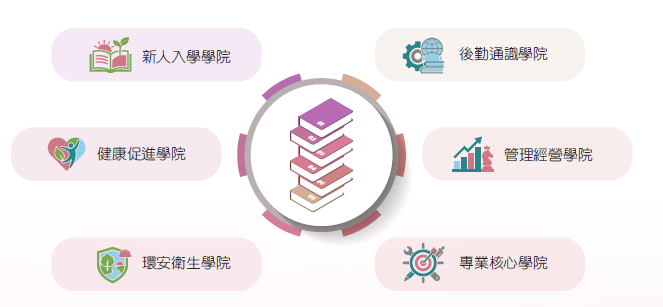
Through training programs tailored to different career stages and professional disciplines, this system supplies targeted training for employees at different career stages, enhancing employees’ knowledge, skills, and competencies, enabling both the company and its workforce to adapt to changing requirements and maintain relevant knowledge and skills.
To encourage utilization of training resources and foster knowledge sharing, SAS has implemented regulations for internal lecturer management, supporting knowledge transfer and strengthening the Company’s core competitiveness.
- Supervisor Training Program
SAS has established a program to develop management skills among supervisors. The program addresses management challenges, strengthens leadership and decision-making abilities, and aims to help supervisors effectively guide their teams toward company objectives. Internal training programs are supplemented with external partnerships, such as with the Chinese Professional Management Association, to offer systematic development opportunities for prospective senior managers. Interactions with other industry leaders are also facilitated. In 2025, two managers participated in external senior manager training.
SAS Group follows the principle of “Caring for Society and Sustainable Development” to meet its corporate social responsibility obligations. The company has focused on initiatives such as “giving back to communities” and “supporting disadvantaged groups,” with the aim of contributing to Taiwan through various activities and safeguards Taiwan with love and responsibility. The Company’s public welfare activities primarily focus on communities surrounding its operating sites. Beneficiaries include charitable organizations and social welfare institutions. Through charitable donations and community participation, the Company continues to give back to local communities and promote sustainable community development.
- Genesis Social Welfare Foundation, Miaoli Branch: Supporting the Ceiling-Mounted Patient Transfer System Project
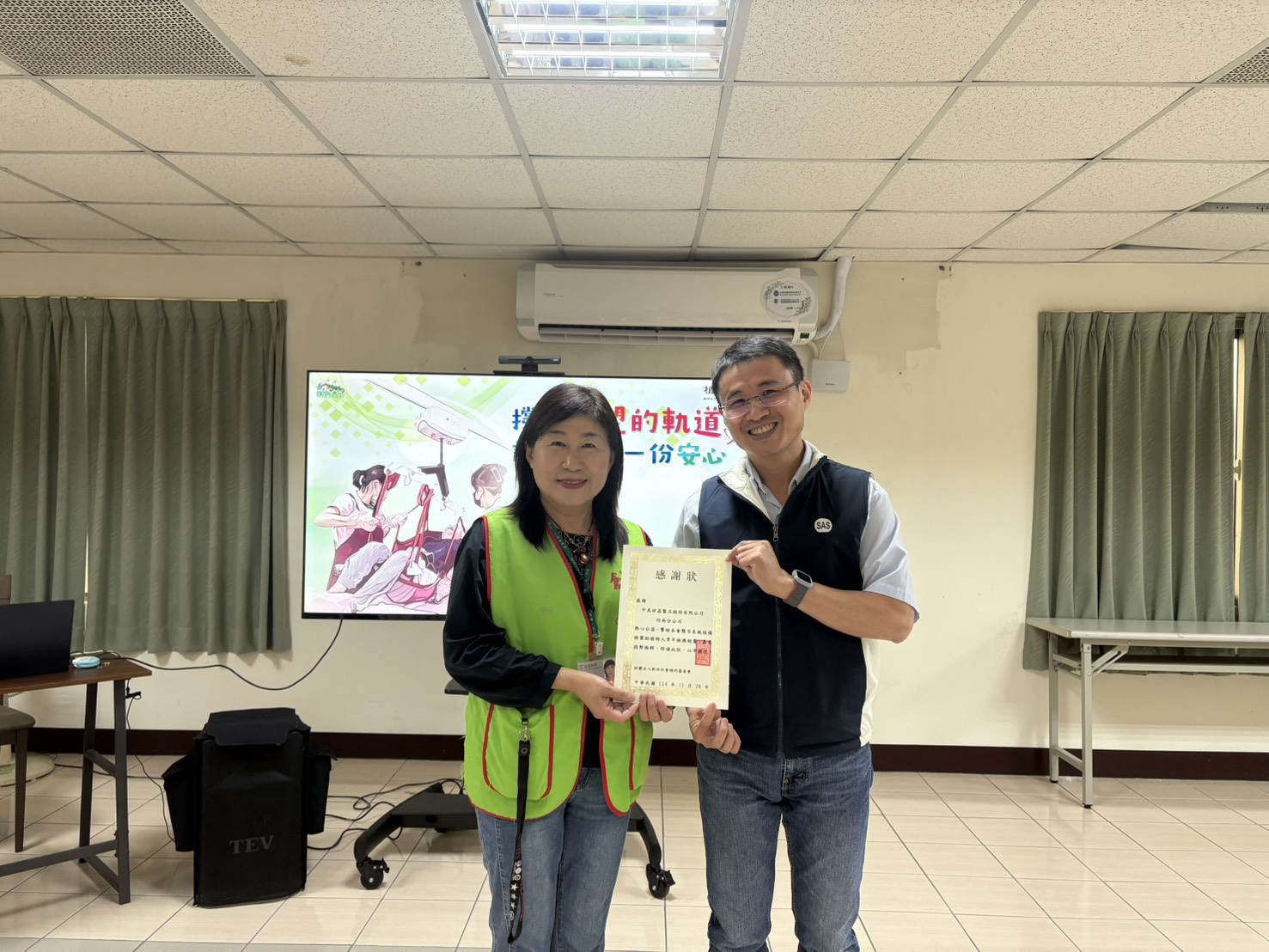
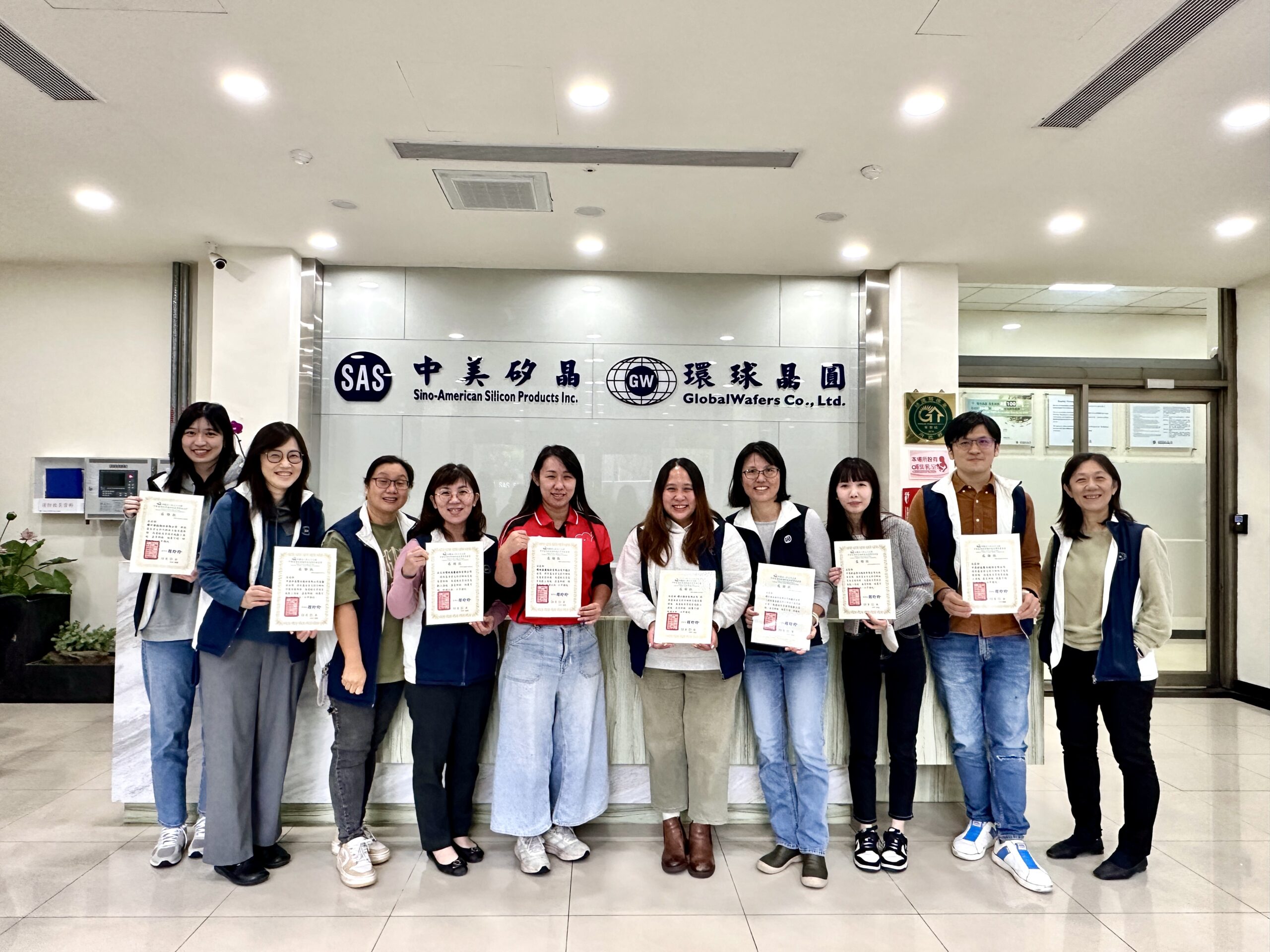
SAS and the GlobalWafers Group have long been committed to ESG sustainability initiatives and have supported the Genesis Social Welfare Foundation, Miaoli Branch for the fourth consecutive year. This year, the Group joined hands with employees to participate in this charitable cause. On November 26, company supervisors led employees in personally visiting the branch and donating NT$300,000, designated specifically for the purchase of a ceiling-mounted patient transfer system.
Through the implementation of this system, caregivers can perform lifting and transfer operations with simple remote-control functions, significantly reducing physical workload. This allows what was once a demanding caregiving process to become safer, more efficient, and more stable, while also ensuring that residents no longer experience fear during transfers. This donation represents not only an upgrade of equipment but also a commitment to respecting and protecting human dignity.
By introducing the ceiling-mounted transfer system, SAS and GlobalWafers hope to provide residents in a persistent vegetative state at the Miaoli Branch with a more dignified caregiving experience, while reducing the physical strain and occupational risks faced by frontline caregivers.
SAS and GlobalWafers firmly believe that when businesses come together with goodwill, that goodwill can be transformed into meaningful support and companionship. Through these efforts, the Company seeks to share the burden borne by families and caregivers, allowing warmth, compassion, and care to continue growing and flourishing within local communities.
- Catholic Foundation of Our Lady of China: Rebuilding Homes After Typhoon Danas, Restoring Hope One Brick at a Time
In response to the impact of Typhoon Danas on vulnerable families living in the coastal and mountainous areas of Chiayi, employees of SAS and the GlobalWafers Group joined hands with the Catholic Foundation of Our Lady of China to support post-disaster housing repairs and livelihood recovery through charitable donations. Leveraging the Foundation’s deep-rooted local service network, these efforts helped repair damaged homes for elderly individuals with disabilities living alone, restore basic residential safety, and provide affected families with essential housing repair and living assistance. The initiative aimed to alleviate the long-term pressures resulting from the disaster and ensure that the journey toward recovery would not be faced alone.
Following the devastating typhoon along the coastal region, damaged homes were once again able to provide shelter from wind and rain. In a small corrugated-metal house located in a remote mountainous area, the four young children of a young mother were provided with safer cribs and essential childcare supplies. These meaningful improvements were made possible through the support entrusted by donors, enabling elderly individuals with disabilities living alone to no longer face damaged homes and difficult circumstances by themselves. Likewise, young families struggling through hardship were able to regain hope and the strength to move forward.
- The Kid’s Bookhouse: Helping Children Build a Boat for Their Dreams
Through charitable donations, SAS and the GlobalWafers Group support The Kid’s Bookhouse and its marine education program in Taitung, encouraging children to explore and connect with the ocean while gradually learning to engage with the wider world. For many children, the ocean is both vast and unfamiliar, and can even evoke feelings of uncertainty or fear. However, under the patient and caring guidance of teachers and coaches, they progress from simply observing the sea from the shore to actively participating in the boat-building process. They learn to paddle canoes, raise the sails of sailboats, and use their own hands and efforts to form a meaningful connection with the ocean.
Throughout every stage of boat construction and practical learning activities, children develop teamwork, mutual support, and cooperation. They also gradually overcome their fears, cultivate patience, and build the courage to face the unknown. The ocean becomes more than a distant landscape; it transforms into an open classroom where children gain confidence, strengthen their sense of identity, and experience the satisfaction that comes from achieving their goals through dedication and perseverance.
SAS and the GlobalWafers Group hope to serve as a stable and long-term source of support throughout the children’s growth journey, helping them discover their potential and recognize their own value through exploration and learning. Completing a boat with their own hands symbolizes their readiness to navigate toward a broader future, opening the door to new opportunities and endless possibilities in life.
- TFCF Hsinchu Center: Sponsoring the Winter Charity Carnival for Children and Families
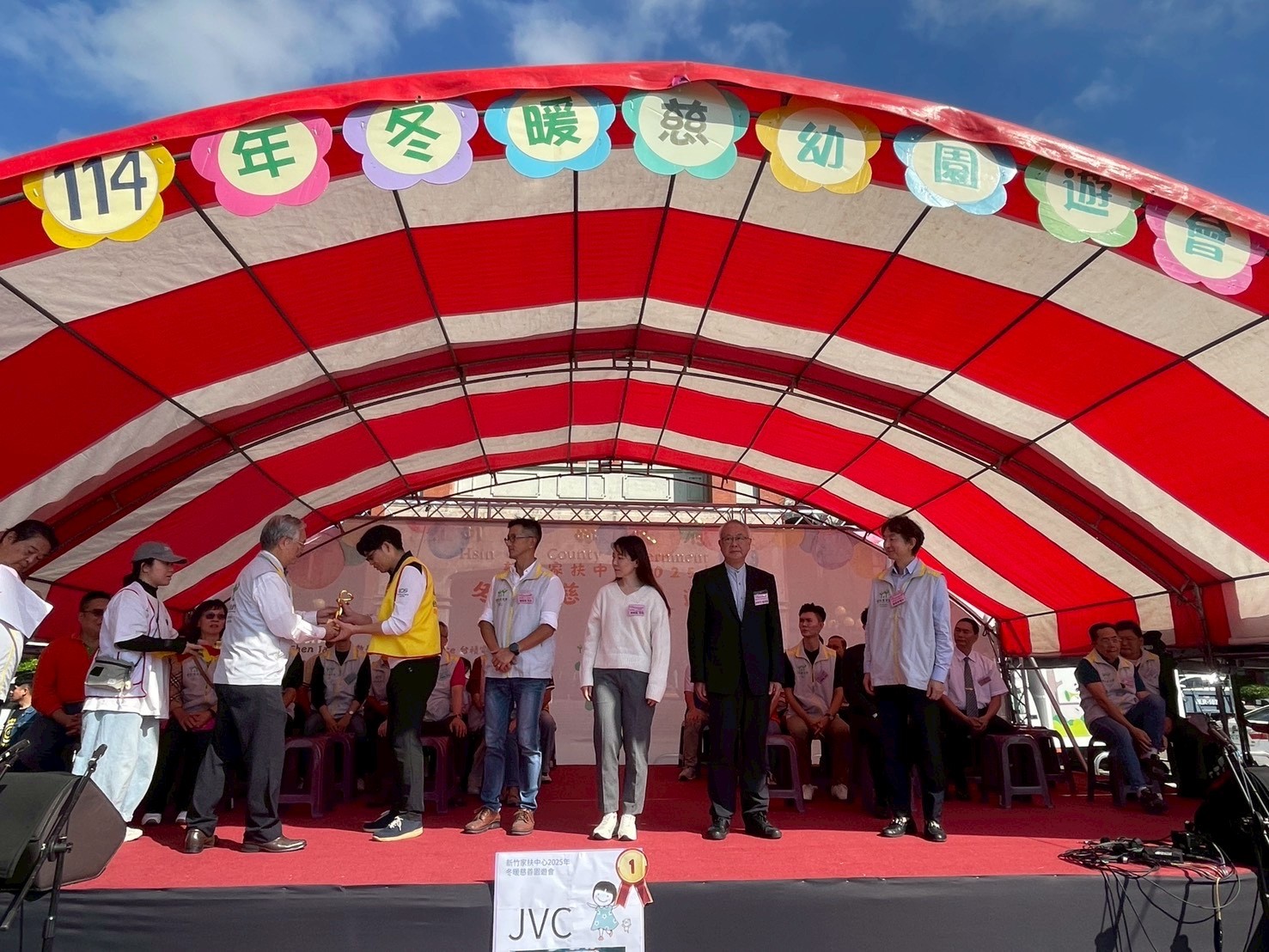
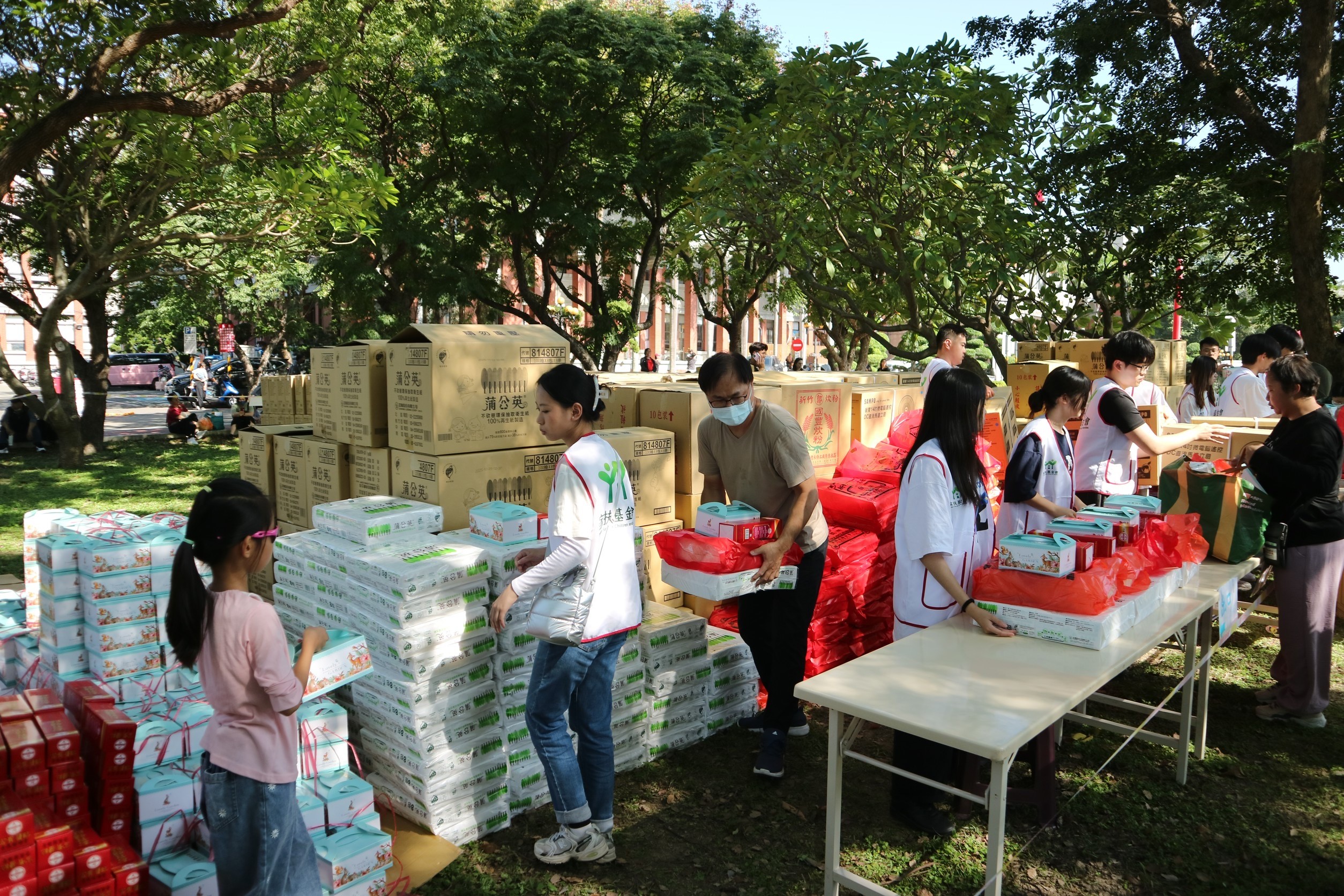
TFCF Hsinchu Center organizes its annual Winter Charity Carnival to provide beneficiary families with opportunities to participate in parent-child activities, strengthening family relationships. The event also recognizes dedicated sponsors and outstanding volunteers, while expressing appreciation to corporate partners for their long-term support of disadvantaged children and families. Through collaborative efforts, the program helps vulnerable families overcome challenges and create positive changes in their lives.
SAS and the GlobalWafers Group have participated in and sponsored the TFCF Hsinchu Center’s Winter Charity Carnival for 16 consecutive years. This long-standing commitment reflects the Company’s dedication to caring for vulnerable communities and supporting disadvantaged families. By working together with community partners, SAS continues to contribute to building a brighter and more hopeful future for families in need while fulfilling its corporate social responsibility commitments.