
Innovative R&D and service
Governance and Responsibility
Facing the normalization of extreme climate events worldwide, climate action has entered a deep-water stage of implementation. Following COP 28, which established the goals of tripling renewable energy capacity and doubling energy efficiency by 2030, and COP 29, which reached a climate finance framework of USD 300 billion per year by 2035 (NCQG), the 30th United Nations Climate Change Conference (COP 30), held in Belém, Brazil, formally marked the critical moment of “NDCs 3.0.” Countries are not only required to submit more ambitious carbon reduction targets, but also to incorporate “nature-based solutions” and “just transition” into their core strategies. In response to the global green transition trend, Taiwan’s National Climate Change Committee has also set more proactive carbon dioxide reduction targets: by 2030, carbon emissions will be reduced by 28±2% compared with the base year of 2005, solar power installed capacity will reach 31.2 GW, and offshore wind power will expand to 10.9 GW. This is equivalent to requiring annual additions of 2.82 GW and 1.17 GW of renewable energy installed capacity, respectively, from 2025 to 2030, providing stable policy support for renewable energy demand. As the Taiwan government promotes simplified procedures for the government-to-government coordination mechanism, tightens import policies, and as enterprises fulfill their ESG commitments, Taiwan’s renewable energy market is expected to grow steadily. SAS has diversified its presence across semiconductors, automotive components, specialty gases, compound materials, and chemical materials. Group-affiliated companies including AWSC, Actron, and TSC have delivered strong revenue performance and continue to demonstrate core competitiveness in their respective fields, becoming important foundations for SAS to expand its diversified business reach.
Looking ahead, SAS will continue to play a leading role in Taiwan’s renewable energy industry. The Company not only maintains a top three market share in Taiwan for solar cells, but also steadily expands emerging businesses such as green electricity, energy storage, and energy conservation through vertical integration and diversified operations, strengthening the competitive advantage of its one-stop energy service platform. Despite challenges such as changes in the international political and economic landscape, fluctuations in raw material prices, and adjustments to domestic policies, the Company continues to invest in the research and development of high-efficiency products, actively develop new customers and international markets, and deepen cooperation with downstream customers to enhance product added value and market flexibility. The Company expects to benefit from favorable policies and international green energy trends, with a more diversified revenue structure and steadily growing profitability driven by increased penetration of high-efficiency products and services. Overall, SAS will address industry risks with a prudent approach, flexibly adjust its business strategies, and make full use of group resources and technological advantages to continue strengthening its market position and sustainable competitiveness.
- Innovation management
- Customer and Product Service
- Product Responsibility
- Maintaining the Company’s Role as an Energy Supplier
In recent years, global warming and the increasing frequency of extreme weather events around the world have intensified the urgency of climate action. At COP28, nearly 200 countries committed to “transitioning energy systems away from fossil fuels,” while approximately 100 countries pledged to triple global renewable energy capacity by 2030. These commitments are expected to help keep global warming below 1.5°C, highlighting the growing importance that governments worldwide place on renewable energy as they confront the challenges of energy transition.
Amid this dynamic and challenging environment, Sino-American Silicon Products Inc. (SAS) has established a vertically integrated presence across the solar industry value chain. Its business scope extends from solar materials, solar cells, and modules to solar power plant development, operation and maintenance services, green electricity trading, energy storage, and energy Internet of Things (IoT) solutions. SAS continues to innovate and actively provide customers with optimal green energy solutions. In response to the global energy transition, the Company has also invested in the development of materials related to second- and third-generation semiconductors, seeking new business opportunities and sales channels.
Currently, SAS primarily focuses on supplying energy-related materials, including solar materials and wafers for industry applications. These products are used in the manufacturing of solar cells and modules, reflecting the Company’s continued commitment to the renewable energy market. In addition, SAS has established a renewable energy retail business to supply green electricity and meet both internal Group demand and external customer needs. In the semiconductor sector, the Company provides gallium nitride (GaN) power semiconductor technologies and solutions for consumer electronics, telecommunications, and automotive applications. These technologies deliver both environmental and energy-efficiency benefits while aligning with future decarbonization trends.
In an increasingly competitive market, SAS ensures that its products and services not only comply with applicable regulations and international trade requirements but also support environmentally beneficial strategies. The Company actively promotes the adoption of green energy among suppliers and customers, working collaboratively toward mutual prosperity and sustainable business development.
Beyond its ongoing investments in the renewable energy and semiconductor industries, the Sino-American Silicon Products Group has proactively demonstrated its commitment to environmental sustainability. The Group has pledged to achieve 100% renewable energy use by 2050, aspiring to leverage its influence to encourage greater awareness and adoption of clean energy throughout the value chain and to accelerate the transition toward a more sustainable future.
- Innovation and Development of Products and Technologies
In response to the national net-zero vision, to achieve energy transition and effectively utilize land area, the Sunrise team focuses on innovative research and development of next-generation technologies and is committed to producing high-efficiency solar cells, moving toward the goals of energy conservation, carbon reduction, and sustainable operations. In 2022, the first upgrade of the production line was carried out, and the Company actively invested in the development and mass production of large-size M10 solar cell processes. With the introduction of P-PREC new process technology, mass production efficiency can reach 23.40%; based on production capacity, 23.40% cells can generate 370 MW of electricity per year, equivalent to a carbon reduction of 229,440 metric tons. As market demand in Taiwan has gradually shifted toward large-size solar products since 2023, SAS independently designed, developed, and mass-produced M10 large-size solar cells to provide the market with solar cell options of different sizes. In 2024, the Company invested in the development of N-type TOPCon solar cells and introduced N-type TOPCon process technology, with mass production efficiency reaching 25.40%; based on production capacity, annual electricity generation can reach 400 MW, equivalent to a carbon reduction of 252,498 metric tons. In 2025, the average efficiency of N-type TOPCon solar cells was further increased to 25.87%; based on production capacity, annual electricity generation reached 415 MW, equivalent to a carbon reduction of 257,175 metric tons. In 2025, the Company received the Taiwan Excellent PV Award from the Energy Administration, Ministry of Economic Affairs. In addition, leveraging the team’s customized R&D strengths, its solar cells passed the rigorous reliability tests for low-earth-orbit satellites by a U.S. customer, enabling Sunrise to continue contributing to energy transition through reliable energy technology.
Based on extensive R&D experience, the Company continues to build on the results of its research and development, including the continuous development of silicon material application products and the enhancement of ultra-high-efficiency monocrystalline silicon solar cells. In response to customers’ needs for various solar cell products, in 2025, the Company increased the average mass production conversion efficiency of N-type TOPCon monocrystalline cells (G10) to 25.87%. It is expected that in 2026, the average mass production conversion efficiency of N-type TOPCon monocrystalline cells will be further increased to 26.0%. The Company has also developed multiple customized products that meet customers’ specific needs and introduced them into mass production, successfully entering high-threshold markets such as Europe and the United States. Some high-end customized products have successfully passed reliability tests for low-earth-orbit satellites by U.S. customers.
- Strategic Deployment to Capture the Renewable Energy Market
As the global renewable energy power generation industry continues to grow, SAS has deeply cultivated the solar energy industry for many years. Since 2015, SAS has entered the solar power generation industry through Hsu-Hsin Branch, and in 2020, the Yilan Branch established the Power Plant Development Department to actively capture Taiwan’s renewable energy market. Through the planning and investment of rooftop, ground-mounted, and floating solar power plants, the Company continues to expand its renewable energy business footprint.
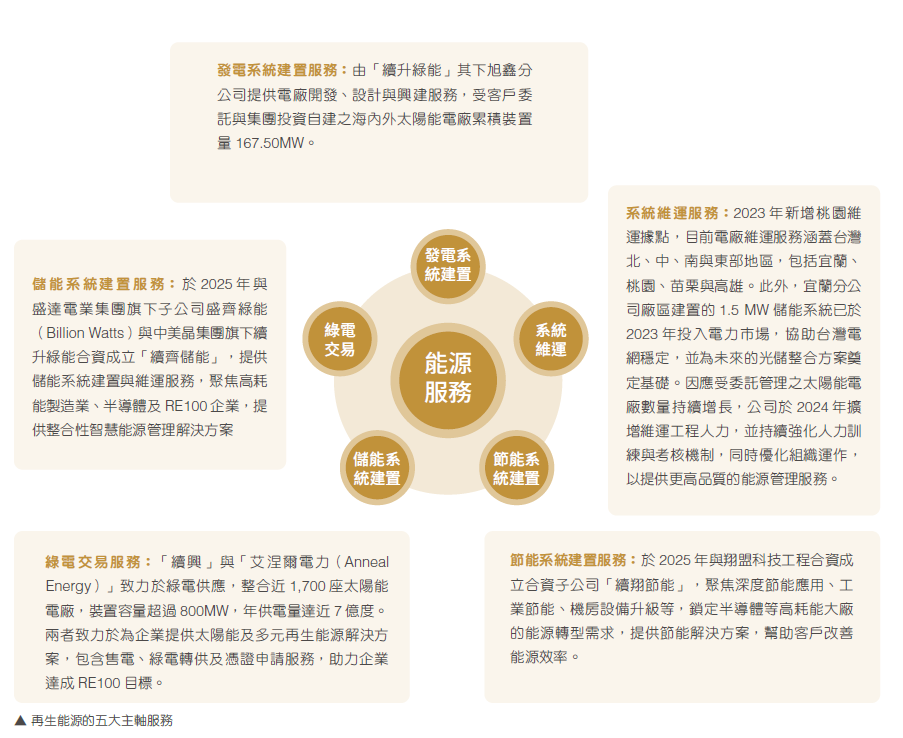
SAS also actively responds to the government’s energy policies. In 2025, SAS integrated the green electricity resources within the Group and established “Susen Green Energy Co., Ltd (SGE),” becoming a comprehensive green energy service platform and expanding the scope of renewable energy services into five major service pillars:
- Solar Power Deployment and Achievements
By the end of 2025, SAS had accumulated approximately 167.50 MW of grid-connected solar power generation systems in operation domestically and overseas. The annual power generation reached 188,132,355 kWh, and the estimated reduction in carbon dioxide emissions was approximately 89,175 metric tons.
In 2023, SAS partnered with Hitachi Air Conditioning to install a solar power system with a total capacity of 9.6 MW at the “Hitachi Air Conditioning Taoyuan Factory,” Taiwan’s largest air conditioning manufacturing site, which was completed in the first half of 2025. In addition, the Company also cooperated with high-speed rail parking lot operators, and the 3.8 MW photovoltaic parking lots at Chiayi High Speed Rail Station and Tainan High Speed Rail Station were grid-connected and put into operation in 2025.
- Expansion of Green Electricity Services and Cooperation
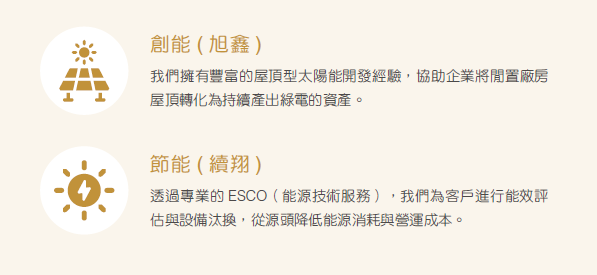
To meet enterprises’ demand for green electricity, SAS established its subsidiary SES in 2021 to provide green electricity wheeling and professional solutions. In 2025, SES’s solar green electricity wheeling volume had grown significantly to rank third in Taiwan. In addition to solar photovoltaics, SES also actively engaged in offshore wind power purchase matching to help enterprises and other Group companies achieve carbon reduction goals. In addition, by merging with another electricity retailer under the Group, Anneal, SES further expanded its green electricity market share, reaching second place in the electricity retail industry in 2025, and providing customers with more comprehensive green electricity solutions.
According to the government’s 2050 Net-Zero Transition Action Plan, the target installed capacity of battery energy storage systems is 1.5 GW in 2025 and will expand to 5.5 GW in 2030, serving as a key measure to enhance renewable energy grid integration and strengthen power grid resilience. The energy-saving market is also expanding rapidly. Through energy-saving services and energy management solutions, users are currently supported from the demand side to improve energy efficiency and reduce overall electricity consumption and carbon emissions. Overall, the SAS Group is leveraging its own experience and one-stop energy service model to connect the supply side and the demand side, creating long-term, stable, and quantifiable economic and sustainability benefits for customers.
SAS is committed to providing customers with the best possible service and firmly believes that service quality is key to improving customer satisfaction and strengthening customer loyalty. Guided by its philosophy of sustainable operations, SAS not only maintains business performance but also recognizes the importance of listening to the voice of the customer. The Company values customer feedback and strives to meet customer needs in order to earn long-term support and achieve sustainable operations.
SAS manufactures solar wafers and cells. Since 2019, the Company has prioritized developing applications based on silicon material technology and completed upgrades to production lines for large-size M10/G12 solar cells in 2023. In 2024, SAS began providing large-size M10 Topcon high-efficiency monocrystalline cells, supplying the market with updated process technologies and customized product services. By adopting a customer-oriented approach supported by professional expertise, we consider issues from our customers’ perspectives and tailor our services to their needs. We strive to provide comprehensive services that enhance customer satisfaction and support sustainable business operations.
- Product Quality and Customer Satisfaction
SAS has consistently strived to achieve the goals of “customer satisfaction, conformity with requirements, total quality control, and continuous improvement,” thereby strengthening customers’ confidence in its products and services. Providing customers with satisfactory services and high-quality products is at the core of SAS’s business philosophy. The Company organizes specialized teams for product development, cost management, manufacturing, quality assurance, and customer service. Any customer questions and feedback can be addressed through professional, prompt, and proactive services, assisting customers in handling and resolving issues to earn customers’ trust and satisfaction.
Regular meetings with customers are conducted to facilitate communication regarding production, sales quality, and engineering topics. Collaborative product development and technical exchanges with the supply chain are pursued to improve product power conversion. Efforts are also made to manage social resources efficiently and to minimize environmental impact. The overall aim is to maintain collaborative relationships and optimize customer experience related to SAS products, technologies, and services.
We conduct customer satisfaction surveys regularly every six months to collect the voice of customers and compile customer feedback. Dedicated teams then convene dedicated meetings, using customer feedback as an indicator to formulate improvement strategies and directions. For items with lower customer satisfaction or dissatisfaction, we further conduct interviews with customers to clarify the issues, and carry out relevant analyses and develop improvement measures for the deficiencies. We translate the concept of continuously improving customer satisfaction into concrete actions, with the expectation of gaining greater customer trust and recognition, becoming customers’ best partner, and achieving sustainable business development together with our customers. For more information, please visit our Service page.
- Product Services
SAS is committed to producing high-efficiency cells and continually innovating in the development of advanced products. Through effective supply chain integration and technological collaboration, SAS rapidly incorporates upstream and downstream technological advancements, resulting in accelerated product launches, improved reliability, and greater confidence in product quality—all aimed at meeting end-users’ needs more efficiently. Regarding quality assurance, SAS implements rigorous procedures and controls throughout customer information collection, product design, and manufacturing processes. Systematic management at each stage ensures exceptional and consistent product quality. Regular reviews—including daily production meetings, weekly operations evaluations, monthly quality management assessments, and annual review meetings—support ongoing product improvements. Through the ongoing PDCA cycle, the Company enhances products and services, reduces costs, and gives back to society.
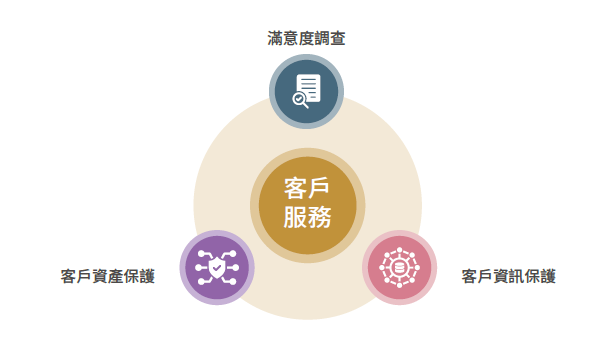
▼客戶服務原則
- Customer privacy
SAS provides customer service with a focus on privacy and confidentiality. Agreements are signed with customers to protect customer confidential information, and all staff must comply with SAS intellectual property policies and safeguard customer data during business interactions according to established procedures.
When delivering services, SAS supplies professional advice and addresses the confidentiality of information and customer privacy, reflecting industry requirements. Confidentiality agreements are routinely established with clients to support mutual interests. Internally, SAS enforces adherence to intellectual property guidelines to protect customer information and facilitate secure business operations. Regular audits are performed to identify potential risks of data breaches. As a result of confidentiality mechanisms and audit management measures, there were no complaints or penalties from customers or regulatory authorities in 2025. This contributed to the Company’s reputation and intangible asset development.
- Protection of Intellectual Property
Since 2010, SAS has introduced the Taiwan Intellectual Property Management System (TIPS), sequentially established management procedures, and passed TIPS certification. In terms of system implementation, the head of the R&D unit serves as the management representative, and implementation representatives from each unit jointly form a promotion team. Internal audits and management reviews are conducted regularly every year. Through the establishment of systematic management, the Company has strengthened and enhanced its intellectual property management capabilities. In 2024, the Company continued to pass the Taiwan Intellectual Property Management System (TIPS) Class A audit certification, and in 2025, it again passed external sampling inspection and participated in external verification to ensure the implementation of the management system.
SAS has adopted “encouraging innovation proposals from all employees” and “establishing a confidentiality management mechanism” as its two major intellectual property management policies; in alignment with its operational and R&D strategies, and taking into consideration SAS’s goal of becoming “a globally technology-leading green energy solution provider” and its R&D strategy of “continuously innovating and developing key technologies and expanding product application fields,” the Company has sequentially established procedures for patent management, confidentiality management, R&D management, and outsourcing management, such as industry-academia collaboration. In terms of intellectual property management, green technology proposals have also been incorporated as intellectual property objectives to expand the Company’s green technology deployment, serving as an important tool for the Company’s sustainable operations; the Company has also strengthened its technological patent deployment and trade secrets, continuously optimized its patent proposal system and patent maintenance evaluation system, and established a comprehensive confidentiality management mechanism, enabling the Company to continuously maintain its competitiveness and safeguard the rights and interests of the Company and its customers.
Given the diverse applications of silicon-based products, SAS is committed to ensuring all items comply with international regulations such as the EU RoHS (Restriction of the use of certain Hazardous Substances in electrical and electronic equipment) and meet customers’ requirements regarding hazardous substances. To that end, SAS mandates comprehensive testing of its products by independent certified third-party laboratories. In 2025, all SAS products were verified to satisfy EU RoHS standards. Furthermore, suppliers of raw and packaging materials are required to submit periodic inspection reports for hazardous substances, issued by impartial accredited third-party laboratories, to uphold product safety, non-toxicity, and reinforce environmental stewardship.
In addition, SAS understands that solar cells and their downstream module products involve certain risks, such as the environmental impact of chemical substances during the product manufacturing process, risks associated with the final use of products under different environments, and risks at different stages after products reach the end of their life cycle. In the solar cell management system, we implement rigorous source control from raw material procurement to production and manufacturing to ensure that raw materials comply with RoHS regulatory requirements. In addition, we also regularly commission independent accredited third-party testing organizations to conduct hazardous substance testing on solar cell products to ensure that the products comply with the highest international environmental protection standards and provide customers with the safest and most reliable green products.
In 2025, there were no cases of product labeling non-compliance reported by stakeholders. In terms of marketing, SAS provides detailed descriptions of potential product risks through media such as product specifications, and complies with the regulations, environmental requirements, and customer requirements of each sales region.